Sewer Line Repair in Fairfield, CA
Root intrusion, joint separation, or a collapsed section — we camera-scope the line first so you know exactly what’s wrong before we ever break ground.
Sewer line repair in Fairfield typically ranges from $3,000–$15,000 depending on the length of pipe affected and whether a targeted (spot) repair or full line replacement is needed. Root intrusion into aging clay and cast-iron laterals is the most common cause in Fairfield’s older, tree-lined neighborhoods.
Why Sewer Lines Fail in Fairfield
Many Fairfield neighborhoods — especially older, established areas with mature trees — still have original clay or cast-iron sewer laterals running from the house to the street. These materials are more prone to root intrusion and joint separation as they age than modern PVC. Roots are drawn to the moisture inside the line and can work into hairline cracks or pipe joints, gradually restricting flow until backups start happening regularly.
Fairfield’s clay soil adds another factor: as it saturates during the wet winter months and dries out again in summer, that seasonal expansion and contraction stresses buried pipe joints — which is part of why sewer problems tend to show up or worsen after Fairfield’s wettest months.
Signs of a Sewer Line Problem
- Multiple drains backing up at the same time
- Gurgling from toilets when you run water elsewhere
- Sewage smell in the yard or near a cleanout
- An unusually green or soggy patch of lawn
- Slow drains throughout the house that snaking doesn’t fix for long
- Toilet water level fluctuating on its own
How We Approach a Repair
Camera Inspection
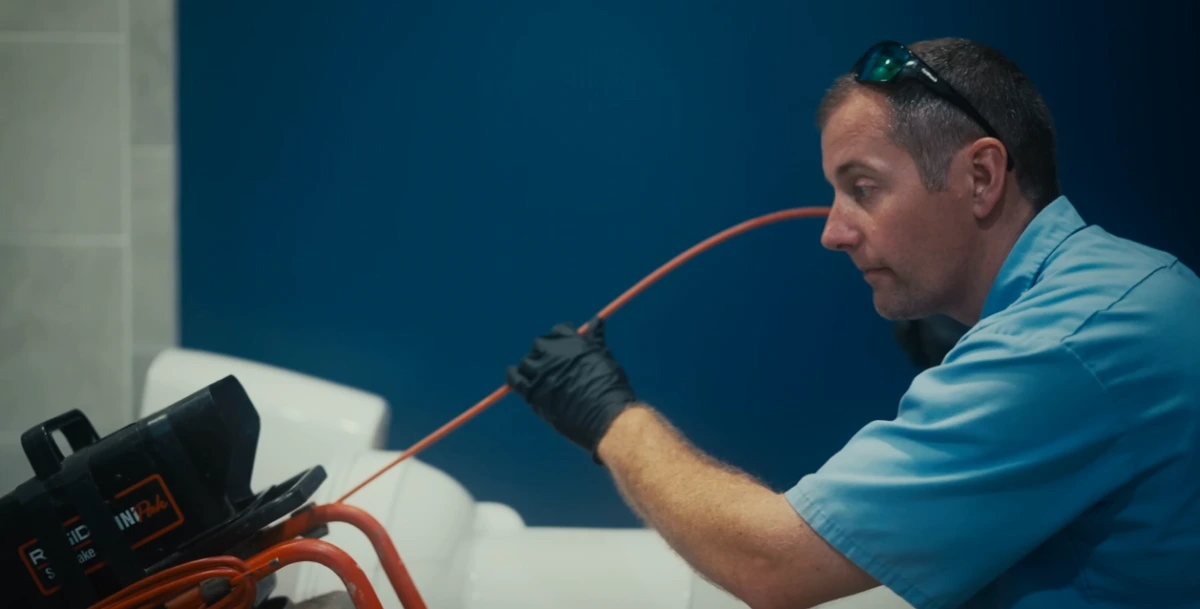
We scope the line first to find the exact location and cause of the problem — root intrusion, a break, or a bellied section.
Targeted vs. Full Repair
If the damage is isolated, we can often excavate just that section instead of replacing the whole line.
Written Estimate
You’ll see the camera footage and a written price before any excavation starts.
Repair & Restore
We repair the line and restore the area as close to its original condition as reasonably possible.
Targeted spot repairs run toward the lower end; full line replacement or severe root damage runs higher. Camera inspection lets us give you an accurate number, not a guess.
Do you always have to dig up the whole yard?
No — if the damage is isolated to one section, we can often do a targeted spot repair instead of a full-line dig.
How do you know where the problem is without digging first?
A camera inspection shows us the exact location and cause before any excavation, so we’re not guessing.
Will tree roots come back after a repair?
Removing the tree isn’t usually necessary — a properly sealed repair with modern pipe materials significantly reduces the chance of new root intrusion at that spot.
Trenchless vs. Traditional Sewer Repair
| Factor | Traditional Excavation | Trenchless Repair |
|---|---|---|
| Yard disruption | Full trench dug along pipe path | Minimal — access points only |
| Best for | Severely collapsed or misaligned pipe | Root intrusion, cracks, most spot repairs |
| Typical timeline | 1–3 days plus restoration | Often completed in a single day |
| Landscaping impact | Requires restoration afterward | Little to no landscaping disruption |
Not every Fairfield sewer repair qualifies for trenchless methods — it depends on what the camera inspection shows. We’ll tell you honestly which option fits your specific situation rather than defaulting to the more expensive one.
What Untreated Root Intrusion Leads To
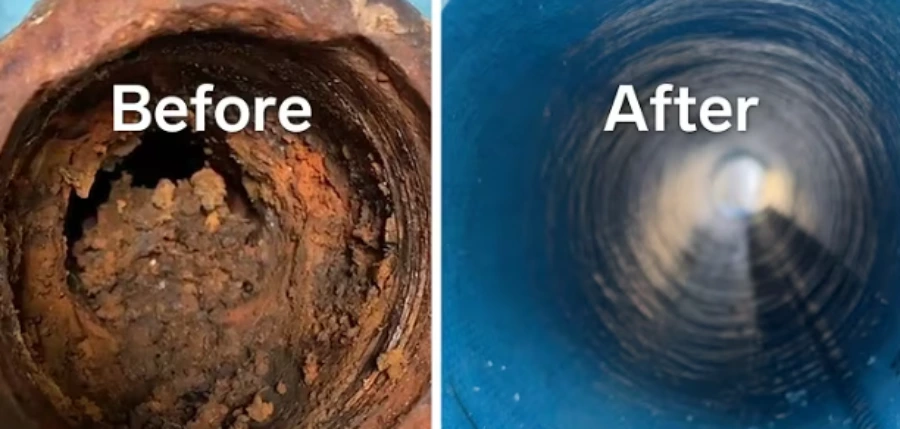
Root intrusion doesn’t stay small. A minor crack that lets in root hairs today can become a fully blocked or collapsed section within a few years as the roots continue growing toward the moisture and nutrients inside the pipe. Catching it early with a camera inspection is almost always less expensive than waiting for a full backup.
Sewer Line Work in Fairfield
Understanding Your Sewer Lateral vs. the Municipal Main
It’s worth understanding the distinction between two different sections of sewer pipe, since it affects who’s responsible for what. Your sewer lateral is the pipe running from your home to the connection point at the property line or street — this is typically the homeowner’s responsibility to maintain and repair. The municipal main is the larger pipe running under the street that collects wastewater from multiple properties and is the City of Fairfield’s responsibility. Most sewer line repairs we handle are lateral repairs, since that’s the section within a homeowner’s property boundary, but if a camera inspection reveals the issue is actually in the municipal main, that’s a City of Fairfield matter rather than something addressed through a private repair.
Clay, Cast Iron, and PVC: What’s Actually Under Your Fairfield Yard
The material of your sewer lateral significantly affects both how likely it is to develop problems and what repair options make sense. Vitrified clay pipe, common in Fairfield homes built through the mid-20th century, is durable against corrosion but has mortar or clay joints every few feet that are natural weak points for root intrusion and separation over decades. Cast iron, used in some homes of a similar era, is strong but eventually corrodes and can develop cracks, particularly at joints. Modern PVC, used in newer construction and in most repairs and replacements today, resists both corrosion and root intrusion far better than either older material, with fewer joints overall since it comes in longer sections. If you don’t know what material your home’s lateral is made of, that’s exactly what a camera inspection tells us — and it meaningfully changes the recommended repair approach.
How Root Intrusion Actually Progresses
Root intrusion doesn’t happen overnight, and understanding the progression helps explain why catching it early matters. It typically starts with fine root hairs finding their way through a small crack or a joint gap, drawn by the moisture and nutrients inside the pipe. Once inside, those root hairs thicken over subsequent growing seasons, gradually filling more of the pipe’s interior diameter and catching debris that would otherwise flow through freely. Eventually, the combination of root mass and trapped debris restricts flow enough to cause slow drains and backups. Left unaddressed long enough, continued root growth can fully block the line or, in more severe cases, cause enough physical pressure to crack or displace sections of pipe. This is why a sewer line that “always backs up occasionally” is often a sign of root intrusion that’s been slowly progressing for years rather than a series of unrelated incidents.
Trenchless vs. Traditional Repair: A Closer Look
| Factor | Traditional Excavation | Trenchless (Pipe Lining or Bursting) |
|---|---|---|
| How it works | Trench dug to expose and replace the damaged pipe section | New liner cured in place inside the old pipe, or a new pipe pulled through as the old one is fractured outward |
| Yard disruption | Significant — full trench along the pipe path | Minimal — typically just access pits at each end |
| Best suited for | Severely collapsed pipe, major misalignment, or where full replacement makes sense anyway | Cracks, root intrusion, and pipe that’s structurally sound enough to line or burst |
| Landscaping/hardscape impact | Requires restoration afterward, potentially including driveways or mature landscaping | Little to no impact on landscaping since excavation is minimal |
Not every sewer repair qualifies for trenchless methods — the decision depends on what the camera inspection actually shows about the pipe’s condition, diameter changes, and the nature of the damage. We’ll walk you through which option genuinely fits your situation rather than defaulting to whichever is more profitable for us.
What Happens If You Ignore a Sewer Problem
A sewer issue that’s caught early — recurring slow drains, occasional gurgling — is typically a straightforward, contained repair. Left unaddressed, root intrusion continues growing, debris continues accumulating, and what started as a partial restriction can progress to a full blockage or a sewage backup into the home itself, which brings health and cleanup costs well beyond the plumbing repair itself. In more severe cases, sustained root pressure or pipe deterioration can lead to a collapsed section, which typically costs significantly more to repair than catching the same issue at an earlier stage. This progression is part of why we recommend addressing a “minor, occasional” sewer symptom rather than waiting for it to become impossible to ignore.
Sewer Line Repair and Fairfield’s Seasonal Patterns
Fairfield’s wet winter months, when the area’s expansive clay soil becomes saturated, are when we see the most sewer-related service calls. Saturated soil adds weight and pressure around buried pipe, which can be the final stress that causes an already-weakened joint to separate or a marginal crack to worsen. This doesn’t mean sewer problems only happen in winter — root intrusion is a year-round, slowly developing process — but the seasonal soil movement is often what turns a slow-developing problem into a noticeable backup, which is why winter tends to be when Fairfield homeowners actually call about a problem that’s likely been building for a while.
Common Questions About Sewer Line Repair in Fairfield
How much of my yard will actually be disturbed for a repair? It depends on the method — targeted spot repairs and trenchless methods disturb far less than a full-line traditional excavation, and we’ll be upfront about what to expect before work starts.
Does the City of Fairfield need to be involved in a lateral repair? A permit is typically required for sewer lateral work; we handle the permitting process as part of the job.
Can I sell my home with a known sewer lateral issue? You can, but many buyers and their inspectors will flag it, and disclosure requirements typically apply — addressing it before listing is often the more straightforward path.
What’s the difference between my sewer lateral and the city’s main line?
Your lateral runs from your home to the property line and is your responsibility; the municipal main under the street is the City of Fairfield’s responsibility.
Is trenchless repair more expensive than traditional excavation?
It varies by job — trenchless avoids landscaping restoration costs but isn’t suitable for every type of damage, which is why we assess based on the camera inspection rather than assuming one method is always better.
How long does a sewer line repair take?
Trenchless repairs are often completed in a single day; traditional excavation and full-line replacement can take several days depending on length and restoration needed.
Will insurance cover a sewer line repair?
Coverage varies significantly by policy — some homeowners policies exclude sewer lateral issues unless a specific rider is added, so it’s worth checking your policy directly.
Sewer Line Repair by Fairfield Neighborhood
Sewer lateral condition tends to track with a neighborhood’s construction era and tree canopy more than any other single factor. Downtown Fairfield, with its pre-1950s housing stock and mature street trees, sees the highest concentration of clay-pipe root intrusion calls in the city. Green Valley follows a similar pattern given its established landscaping, even though the housing itself is somewhat newer than downtown. Cordelia’s newer construction generally means PVC laterals with far fewer root-intrusion issues, though as those neighborhoods age and any newly-planted trees mature over decades, the same pattern can eventually develop there too — it’s a function of pipe age and material meeting root proximity, not a permanent exemption for newer areas.
What We Do Before Recommending Any Repair
Full Camera Inspection
We scope the entire accessible length of the lateral, not just the first few feet, to understand the full scope of any damage.
Locate and Document
We pinpoint the exact location and nature of each problem area, often with GPS or measured distance markers for precise excavation if needed.
Present Real Options
You’ll see the camera footage yourself and understand exactly why we’re recommending a specific repair method, not just a price with no explanation.
Why We Camera-Inspect Before Ever Recommending Excavation
It’s tempting for a plumbing company to assume the worst and recommend a full line replacement without confirming the actual extent of damage — it’s a bigger job and a bigger invoice. We do the opposite: we camera-inspect first because a large share of sewer problems we find are actually isolated to a specific section, meaning a targeted spot repair resolves the issue without the cost or disruption of replacing a line that’s mostly still sound. This isn’t just about saving you money, though it often does — it’s about giving you an honest picture of what’s actually wrong before recommending how to fix it.
Sewer Backups and Homeowner Cleanup Considerations
If a sewer backup has already reached the point of pushing wastewater into your home, there are a couple of practical things worth knowing. Sewage cleanup involves genuine health hazards — wastewater can carry bacteria and pathogens, so any affected flooring, drywall, or belongings should be treated with appropriate caution rather than handled casually. We can advise on immediate steps when you call, and in cases involving significant water or sewage damage, a restoration specialist alongside the plumbing repair itself is often the right call. Addressing the plumbing cause without also properly cleaning and drying the affected area can leave mold and odor issues behind even after the sewer problem itself is fixed.
Sewer Line Repair for Fairfield Landlords and Property Managers
A sewer lateral issue in a rental property is one of the more disruptive problems a landlord can face, both because it affects tenant livability and because camera inspection and repair timelines need clear communication with whoever is currently occupying the property. We work directly with Fairfield landlords and property managers on sewer issues, providing camera footage and written documentation that’s useful both for coordinating repair timing with tenants and for any insurance or expense-tracking purposes on the ownership side.
Getting a Second Opinion on a Sewer Recommendation
A full sewer line repair is a significant investment, and it’s entirely reasonable to want confidence in the recommendation before committing to it. If another company has recommended full-line replacement, we’re glad to review their findings or perform our own camera inspection to confirm whether that’s genuinely necessary or whether a more targeted repair would resolve the same issue. We’d rather you make this decision with complete, honest information than take any single recommendation — including ours — purely on faith.
This is especially worth doing before agreeing to a full-line excavation, given how much more disruptive and costly that option is compared to a targeted repair — the difference in outcome for you is significant enough that a second look is almost always worthwhile.
Call us and we’ll talk through your specific situation honestly, including whether a second opinion makes sense for your case.
We’ll always show you what the camera actually finds rather than asking you to simply trust a verbal assessment.
That transparency is the standard we hold ourselves to on every sewer job in Fairfield, large or small.