Water Heater Repair & Installation in Fairfield, CA
Fairfield’s hard water eats through water heaters years before it should. We repair, replace, and install water heaters built to actually survive it — with a written price before we start.
A standard water heater repair in Fairfield typically runs $150–$300, while a full replacement runs $1,500–$3,500 depending on tank size and whether it’s a standard tank or tankless unit. Fairfield’s 9.2 GPG hard water shortens most water heaters to an 8–12 year lifespan, versus the 12–15 years they’d get in a soft-water area — which is why so many Fairfield homeowners are replacing units earlier than they expected to.
Why Water Heaters Fail Faster in Fairfield
If you’re a Fairfield homeowner and your water heater is already acting up before its 10th birthday, it’s not bad luck — it’s the water. Fairfield’s municipal supply tests at 9.2 grains per gallon, which is classified as hard water. Every gallon that passes through your tank leaves behind a little more mineral scale on the heating element and along the tank floor. Over years, that scale layer insulates the burner or element from the water it’s supposed to be heating, forcing the unit to work harder and run longer to hit the same temperature — which is usually the first thing homeowners notice: the water heater running almost constantly, or the utility bill creeping up with no other explanation.
Homes in older parts of Fairfield — particularly downtown and other neighborhoods with housing built before the mid-1990s — often compound the problem with galvanized or aging supply lines feeding the unit, which adds even more sediment into the mix over time.
Signs Your Fairfield Water Heater Needs Attention
- Popping, rumbling, or cracking sounds from the tank
- Noticeably less hot water than it used to produce
- Water heater running longer or more often than normal
- Rust-tinted or discolored hot water
- Pilot light or igniter problems (gas units)
- Water pooling at the base of the tank
- Unit is 8+ years old and hasn’t been serviced
- Rotten-egg smell from hot water taps
Repair, or Replace? Here’s How We Decide
Not every failing water heater needs to be replaced. If your unit is under 8 years old and the issue is something isolated — a bad thermocouple, a failed heating element, a stuck valve — a repair usually makes more sense and costs a fraction of a new unit. Once a tank is past 8–10 years in Fairfield’s hard water, or the tank itself has started leaking or rusting from the inside, repair stops making financial sense and we’ll tell you that directly rather than patching something that’s going to fail again in a few months.
Our Water Heater Process
Diagnose the Actual Cause
We test the unit, check for scale buildup, and identify whether it’s a repair or a replacement situation — and explain why, in plain terms.
Written Estimate
You get an itemized price before any work starts, whether it’s a repair or a full installation.
Repair or Install
Most repairs are same-day. Standard tank replacements are typically completed in a few hours; tankless installs may take longer depending on venting and gas line work.
Protect It Going Forward
For new installations, we’ll talk through whether a whole-home water softener makes sense to protect your investment from Fairfield’s hard water going forward.
Typical range from a simple repair to a full tank replacement — exact pricing depends on the unit and the job. Diagnostic visits start at $75–$150.
Common Questions About Water Heaters in Fairfield
How long should a water heater actually last in Fairfield? With Fairfield’s hard water, expect 8–12 years from a standard tank unit without a softener, compared to 12–15+ years in areas with soft water. A water softener can help close that gap.
Is a tankless water heater worth it with hard water? Tankless units are even more sensitive to mineral scale than tank units because water passes through narrow heat-exchanger channels — they generally need a water softener or at minimum a descaling maintenance schedule to hit their expected lifespan in Fairfield.
Do you offer same-day water heater repair in Fairfield?
Yes — most water heater repairs, including no-hot-water emergencies, can be handled same-day.
Do you install tankless water heaters?
Yes, we install both standard tank and tankless water heaters, and can talk through which makes more sense for your household’s hot water usage.
Will a water softener really extend my water heater’s life?
Yes. Reducing the mineral load reaching your tank is the single biggest factor in extending a water heater’s life in a hard-water area like Fairfield.
Tank vs. Tankless: Which Makes Sense With Fairfield’s Hard Water?
Both options work in Fairfield — but hard water affects them differently, and that’s worth understanding before you decide.
| Factor | Standard Tank | Tankless |
|---|---|---|
| Upfront cost | Lower ($1,500–$2,500 typical) | Higher ($3,000–$6,000 typical) |
| Hard water sensitivity | Moderate — scale settles on tank floor | High — scale narrows heat exchanger channels |
| Lifespan without softener | 8–12 years in Fairfield | Can drop below 8 years without descaling |
| Continuous hot water | Limited by tank size | Yes, on demand |
| Maintenance need | Annual flush recommended | Annual descaling recommended |
If you’re leaning tankless, pairing it with a whole-home water softener isn’t optional in Fairfield — it’s close to essential for hitting the unit’s expected lifespan.
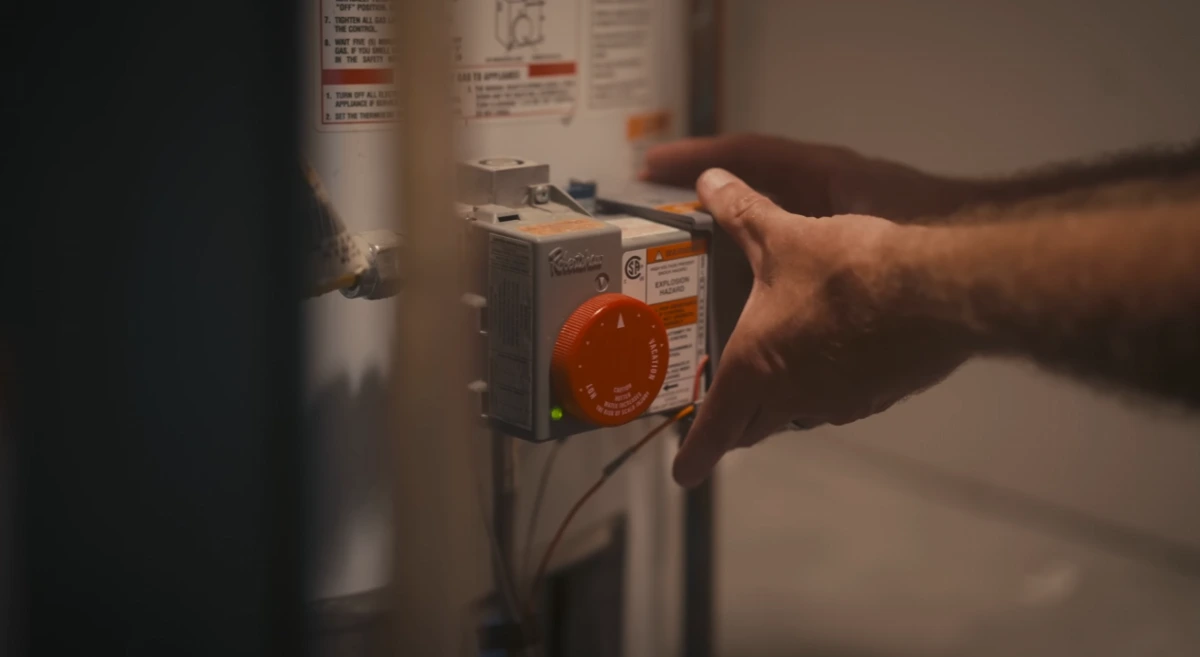
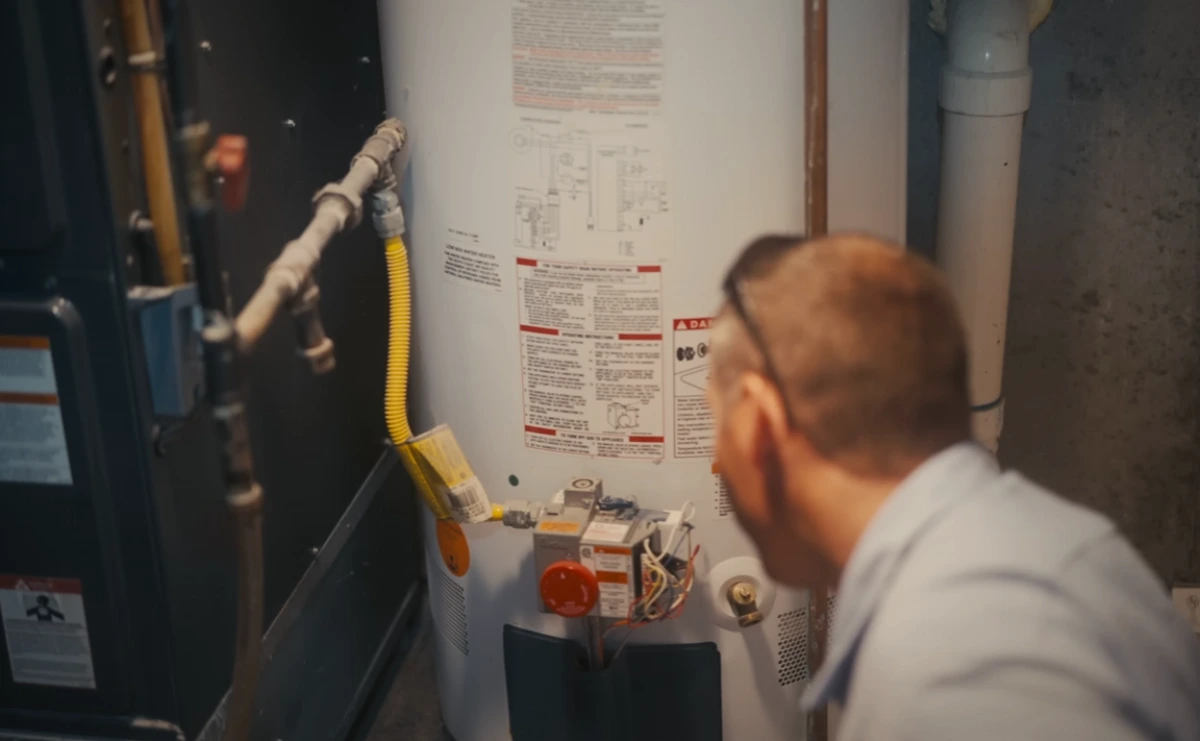
Recent Water Heater Work in Fairfield
Gas vs. Electric Water Heaters in Fairfield
Both gas and electric water heaters are common throughout Fairfield, and the choice usually comes down to what’s already plumbed into your home rather than a clean-slate decision. Gas water heaters generally heat water faster and cost less to operate in areas with reasonable natural gas rates, which makes them the more common default in older Fairfield neighborhoods where gas service was already run to the home decades ago. Electric units are simpler mechanically — fewer components that can fail — and are often the practical choice in homes without an existing gas line, since running new gas service can add meaningfully to an installation cost.
From a hard-water standpoint, the fuel type doesn’t change how much scale builds up inside the tank; that’s purely a function of water hardness and usage. But it does change how failure shows up. A gas unit with a scaled-over burner assembly tends to announce itself with popping and rumbling sounds as trapped water pockets boil against the sediment layer. An electric unit with a scaled heating element more often shows up as a slow decline in hot water output, since the element itself is losing efficiency gradually rather than making noise about it.
What Happens During a Professional Water Heater Inspection
If you’ve never had a water heater formally inspected, here’s what the visit actually involves. We start by checking the age and condition of the tank itself — the manufacture date is usually coded into the serial number, which tells us where the unit sits in its expected Fairfield lifespan. From there we check the anode rod, a sacrificial metal rod inside the tank designed to corrode instead of the tank itself; in Fairfield’s hard water, anode rods typically need earlier replacement than the national average because the mineral-heavy water accelerates the corrosion process the rod is meant to absorb.
We also check the temperature and pressure relief valve, a critical safety component that releases pressure if the tank overheats, and test the thermostat’s accuracy against the water’s actual output temperature. For gas units, we inspect the burner assembly, pilot light or igniter, and venting for proper draft. For tank units generally, we look for any signs of rust or moisture at the base — an early indicator of a tank that’s beginning to fail internally, often before any other symptom is noticeable.
Understanding the Anode Rod — Fairfield’s Hidden Maintenance Item
Most homeowners have never heard of an anode rod, but it’s arguably the single most important maintenance item for extending a water heater’s life in a hard-water area like Fairfield. The rod is made of magnesium or aluminum and is designed to corrode preferentially — meaning it sacrifices itself so the steel tank doesn’t rust through. Once the rod is fully consumed, the tank itself becomes the next thing corrosion attacks, which is often when leaks start.
In soft-water regions, an anode rod might last the better part of a water heater’s service life without attention. In Fairfield’s 9.2 GPG hard water, the accelerated mineral activity means the rod is often significantly depleted well before the tank’s expected end-of-life, which is exactly why a mid-life inspection can meaningfully extend how long the unit lasts — replacing a $30–$50 rod is a lot cheaper than replacing the whole water heater years early.
Maintenance Tips to Extend Your Water Heater’s Life
- Flush the tank annually to remove settled sediment before it hardens into scale
- Have the anode rod checked at the 3–5 year mark given Fairfield’s hard water
- Set the thermostat to 120°F — hot enough for comfort, cool enough to slow scale formation
- Test the temperature and pressure relief valve annually for proper function
- Consider a whole-home water softener if the unit is under 5 years old and already showing scale symptoms
- Keep the area around the water heater clear for proper airflow and access
What Affects Your Water Heater Repair Cost
A few factors typically determine where a Fairfield water heater job lands within the pricing range. The age and condition of the unit matters most — a straightforward thermocouple or heating element swap on a younger unit costs far less than diagnosing and fixing a unit that’s been neglected for years. Tank size affects installation cost since larger tanks and their fittings cost more. Whether the job is a like-for-like replacement or requires code updates — for example, bringing an older installation up to current venting or seismic strapping requirements — can add to the total. And gas line or electrical work needed to accommodate a different unit type adds its own cost on top of the water heater itself.
Common Questions From Fairfield Homeowners
Can I flush my own water heater, or does that need a professional? A basic tank flush is something handy homeowners sometimes do themselves, though we’re happy to include it as part of a service visit if you’d rather not deal with it.
Why does my new water heater already have less hot water than I expected? If it’s genuinely new, this usually points to a sizing issue — the tank may be undersized for your household’s actual hot water demand rather than a defect in the unit itself.
Is it normal for a water heater to make noise when it’s first turned on cold? Some initial expansion sounds are normal; persistent popping or rumbling during normal operation is the scale-related sound worth having checked.
What’s the difference between a 40, 50, and 75-gallon tank for a Fairfield household? Household size and simultaneous hot water demand (multiple showers, laundry, dishwasher running together) determine the right size — we can help you figure out what fits your household during an estimate visit.
How often should I flush my water heater in Fairfield?
Given the hard water here, an annual flush is a reasonable interval to prevent sediment from hardening into harder-to-remove scale.
What is an anode rod and why does it matter?
It’s a sacrificial rod that corrodes in place of your tank; Fairfield’s hard water means it typically needs earlier replacement than the national average.
Should I go bigger than my current tank size when replacing it?
Only if your household’s hot water demand has genuinely grown — we can help assess this rather than defaulting to “bigger is better.”
Do gas water heaters need different maintenance than electric?
Gas units need burner and venting checks in addition to the tank maintenance both types share; electric units are mechanically simpler with fewer components to inspect.
Water Heater Patterns We See Across Fairfield Neighborhoods
Water heater calls don’t look identical across Fairfield — the age of the housing stock in a given area changes what we typically find. In downtown Fairfield’s older homes, we often find original galvanized supply lines feeding the water heater, which adds sediment into the mix beyond what the hard water alone contributes. In newer areas like Cordelia, homes are less likely to have pipe-material issues, but larger homes with more bathrooms mean higher overall hot water demand, which puts more cumulative wear on the unit even though the plumbing itself is younger. Regardless of neighborhood, the 9.2 GPG hard water is a citywide constant — it’s the single factor that affects every Fairfield water heater the same way, independent of the home’s age or location.
This is part of why we don’t treat every water heater call the same way. A 15-year-old unit in a downtown Fairfield home with galvanized lines gets evaluated differently than a 6-year-old unit in a newer Cordelia build — the likely causes, and the right fix, aren’t identical just because the symptom sounds the same over the phone.
Water Heater Warranties and What They Actually Cover
Most new water heaters come with a manufacturer’s tank warranty ranging from 6 to 12 years depending on the model, but it’s worth understanding what that warranty actually covers before assuming it protects you from every scenario. Manufacturer warranties typically cover the tank itself against manufacturing defects — they generally don’t cover labor for removal and reinstallation, and many have specific maintenance requirements (like documented annual flushing) that, if not met, can void coverage entirely. This matters more in Fairfield than in soft-water regions, since some manufacturers specifically exclude damage attributable to hard water scale buildup, treating it as a maintenance issue rather than a covered defect.
Practically, this means keeping some record of maintenance — even something as simple as a note of when you had the tank flushed — can matter if you ever need to make a warranty claim. It also means a water softener isn’t just about extending the unit’s practical life; in some cases it’s what keeps a warranty claim valid in the first place.
What a No-Hot-Water Emergency Usually Means
A sudden, complete loss of hot water — as opposed to a gradual decline — points to a different set of causes than routine wear. For gas units, this is often a pilot light that’s gone out or an igniter that’s failed; for electric units, it’s frequently a tripped high-temperature limit switch or a fully failed heating element. In either case, a sudden total loss is usually a same-day fixable problem rather than a sign the whole unit needs replacing, which is why it’s worth a call before assuming the worst. We treat no-hot-water calls as a priority precisely because most Fairfield households can’t easily go without hot water for long, and the underlying cause is often more straightforward to resolve than homeowners expect.